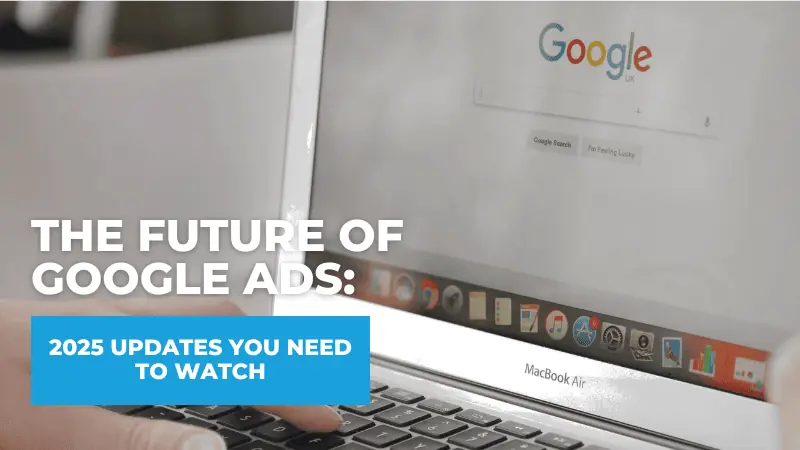
Why 2025 Is a Pivotal Year for Google Ads
Google Ads has always been a dynamic advertising platform, but 2025 is shaping up to be one of its most transformative years yet.
Between advances in AI, new audience targeting capabilities, privacy-driven changes, and emerging ad formats, small businesses will need to adapt their pay-per-click (PPC) strategies to remain competitive.
The good news? These changes aren’t just for big-budget advertisers. Many of the new features are designed to make campaigns more efficient and data-driven, giving small businesses better tools to reach their target customers at the right time and with the right message.
CLICK HERE to Schedule Your Discovery Call With Samson Media!
AI-Powered Campaign Creation & Optimization
One of the most significant changes in 2025 is the evolution of AI-driven Smart Campaigns. Google has been integrating machine learning into Ads for years, but now AI can:
- Automatically generate multiple ad variations based on your landing page content
- Test headlines, descriptions, and images in real time
- Predict which combinations will deliver the best ROI
This level of automation means that advertisers can get campaigns up and running much faster — and with far less guesswork. Instead of manually testing ad combinations, AI can run hundreds of micro-tests in the background, instantly pausing underperforming assets and boosting top performers.
For small businesses, this means less time tinkering with ads and more time focusing on lead follow-up and sales. According to Google’s internal data, advertisers using AI-powered assets have seen conversion rates increase by up to 12% compared to manually created ads (Google Ads Help).
See also: Power of AI in Digital Marketing — how AI tools are changing the way businesses advertise online.
New Audience Targeting Capabilities
With the phase-out of third-party cookies continuing in 2025, Google Ads is shifting to privacy-friendly targeting based on first-party data, contextual signals, and aggregated audience insights.
For advertisers, this means:
- Deeper integration with Google Analytics 4 (GA4) to create audiences based on user behavior across websites and apps
- Customer Match improvements allowing advertisers to securely upload and match their own customer data for remarketing
- Predictive audiences that use machine learning to identify high-potential users before they convert
First-party data has become the most valuable asset in digital marketing. Businesses that own and manage their customer information can create highly personalized ad experiences that don’t rely on third-party tracking.
This is especially relevant for small businesses running email marketing campaigns. Every time you collect an email address via a lead magnet or newsletter sign-up, you’re building a data set that can fuel precise and cost-effective Google Ads targeting.
Smart Bidding Evolution
Smart Bidding strategies like Target CPA (Cost Per Acquisition) and Maximize Conversions aren’t new, but 2025 brings more predictive algorithms and deeper integration with offline conversion tracking.
Key improvements include:
- Real-time adjustment to bids based on device type, location, time of day, and audience segment
- Predictive modeling that anticipates conversion likelihood before the click happens
- Ability to optimize for lifetime customer value instead of single transactions
This is a huge opportunity for service-based businesses, franchises, and e-commerce companies. For example, a local home services business could set Smart Bidding to prioritize leads from zip codes with historically higher service contract rates — ensuring ad spend goes to the most valuable customers.
You might like: Local SEO Strategies to Get Your Business Found Online — how to connect with high-value local audiences.
Video Ads in Search Results
One of the more exciting updates is the expansion of video ads into Google’s search results pages (SERPs). Video ad previews now appear directly alongside traditional text ads for certain high-intent keywords.
This opens new opportunities for small businesses to:
- Show quick product demos
- Feature customer testimonials
- Offer service walk-throughs
Since video can increase message retention by up to 95% compared to text alone (Wyzowl), integrating video into search campaigns can help you stand out in competitive markets.
Pairing these ads with a strong landing page and a clear call-to-action — such as “Book a Free Consultation” or “Request a Quote” — can dramatically improve conversions.
Practical Tips for Small Business Advertisers
To make the most of Google Ads in 2025, small businesses should go beyond simply “running campaigns” and instead approach PPC as a strategic, ongoing process. The updates rolling out this year make it easier than ever to compete — but only if you apply them correctly.
Here’s how to put the changes into action:
- Leverage AI tools for ad creation and testing
- Use Google’s AI-powered asset creation to automatically generate multiple ad versions and headlines.
- Regularly check the “Ad Strength” score in Google Ads and swap underperforming elements for higher-scoring options.
- Example: Instead of writing one or two static ads per ad group, let AI generate dozens of headline variations and track which combinations convert best.
- Start collecting and organizing first-party data now
- Build your own customer database through lead magnets, newsletter sign-ups, and customer forms.
- Store data in a CRM like HubSpot or Zoho CRM so you can segment audiences by behavior, location, or service interest.
- Upload this data into Google Ads for Customer Match campaigns, which target people who already know and trust your business.
- Experiment with video formats in search results
- Test short, high-impact videos for service-based businesses (e.g., “before and after” home renovations, product demos, or customer testimonials).
- Keep videos under 30 seconds for search ads, with captions for sound-off viewing.
- Link video ads to a landing page that reinforces your message and includes a strong call-to-action.
- Use Smart Bidding with clear, measurable conversion goals
- Define what success looks like: Is it form fills, phone calls, bookings, or online purchases?
- Set up conversion tracking in both Google Ads and Google Analytics 4 (GA4) so you can measure ROI accurately.
- Test different Smart Bidding strategies — start with Maximize Conversions, then compare performance to Target CPA or Target ROAS.
- Regularly review and refine your campaigns
- Check search term reports weekly to remove irrelevant keywords that waste budget.
- Monitor click-through rate (CTR) and conversion rate, aiming for steady improvements month-over-month.
- Run A/B tests for headlines, landing page layouts, and CTA placement to continuously boost performance.
- Integrate Google Ads with other marketing channels
- Combine PPC with content marketing to capture organic traffic and warm up audiences before they see your ads.
- Pair ads with email marketing campaigns for follow-up sequences that nurture leads.
- Use remarketing to re-engage website visitors with tailored offers.
Pro Tip: Treat Google Ads as a living, evolving campaign rather than a “set it and forget it” effort. Even small changes — like improving a headline or refining audience targeting — can lead to significant gains in both lead volume and cost efficiency.
Real-World Example: How AI & Smart Bidding Improved ROI
A 2024 case study from WordStream showed how a mid-sized e-commerce retailer used AI-powered ad creation and Smart Bidding to cut their cost-per-acquisition (CPA) by 26% while increasing conversion volume by 18% over three months. The strategy combined:
- Automated asset creation to test hundreds of headline and image combinations
- Customer Match lists to re-engage past buyers
- Maximize Conversion Value bidding tied to high-margin products
While every business is different, this example demonstrates how embracing AI and automated bidding can help advertisers work smarter, not harder.
Make Google Ads Work Harder for Your Business
The future of Google Ads in 2025 is about smarter automation, better audience insights, and more engaging formats. By adopting these tools early, small businesses can improve their ROI, save time, and compete effectively — even against larger competitors.
Learn more about Samson Media’s PPC & Google Ads Management to see how we can help you implement these strategies and maximize your ad spend.